Would You Like Wood or Plastic with Your Groove?
Updated: Jul 16
A Junior High Jazz Tale About Soul, Sound, and the Power of a Reed**
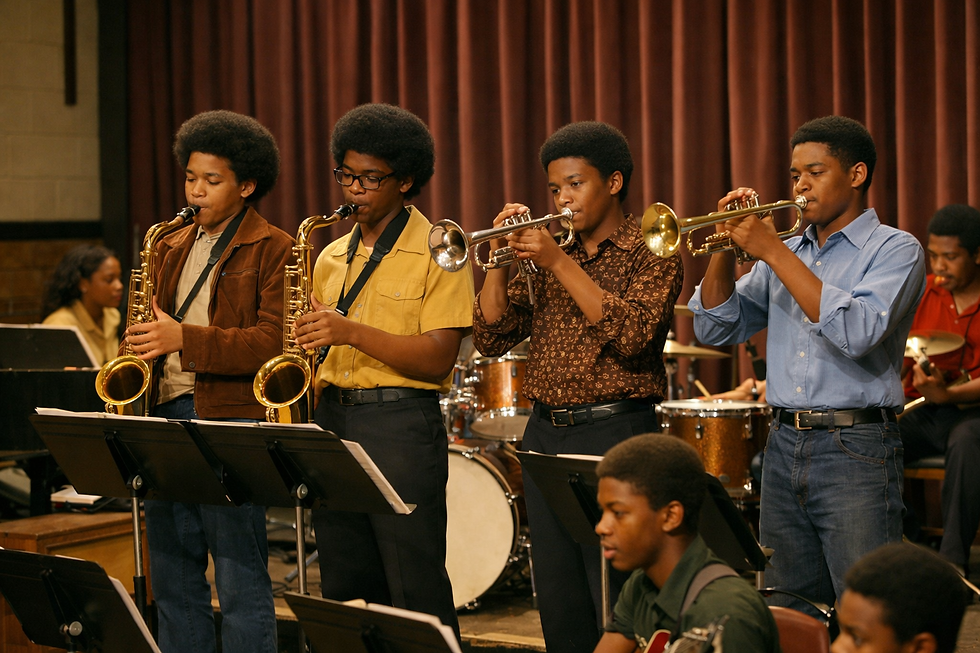
Back in the ’70s, when my afro was big and my alto sax was even bigger, I played in my junior high school band. Most kids stayed in the general band, but a chosen few were invited into the school’s elite jazz band. Somehow, I made the cut. To this day, I’m convinced they needed a sax player more than I needed talent.
Jazz band wasn’t child’s play. The notes were trickier, the rhythms tighter, and every musician — drummer, guitarist, flutist, didn’t matter — had to take a solo. And when your solo came, you had to bring it. Not “play the notes.” Not “do your best.” No. You had to put your foot in it like your future depended on that one bar of music.
Lucky me: about 80% of our songs featured a sax solo. Usually right before the drummer, who always got the last word. No pressure at all.
And then came The Great Reed Crisis.
🎷 Wood vs. Plastic: A Battle for My Groove
Because of budget issues, the horn section was forced to switch from wooden reeds to plastic ones.
Now, I loved my wooden reeds. They gave me warmth, soul, and that smoky jazz tone that made me feel like a miniature Grover Washington Jr. But after a few songs, the wood would splinter, and I’d end up with half a reed stuck to my lip like a sad musical Band Aid.
Plastic reeds didn’t splinter — but they were stiff as a two by four. Blowing through them felt like trying to inflate a truck tire with a drinking straw. The sound was technically correct, but emotionally? It was like jazz on decaf.
🎶 The Day the Groove Went Missing
The difference became painfully obvious during our jazz funk arrangement of “Fly, Robin, Fly,” written by Sylvester Levay and Stephan Prager.
Midway through the tune, the horn section — including me — would rise dramatically for our feature. After a few bars, everyone else sat down, leaving me standing alone to carry the bridge like a tiny sax wielding Atlas.
With the plastic reed, the notes came out, but the groove… didn’t.
The audience clapped politely — the kind of applause that says, “Bless their hearts, they’re trying.”
Mr. Clink — yes, that was his real name — stood there like a statue, giving a gentle baton wave to cue the next soloist. You could practically hear him thinking, Lord, give me strength.
Word got around about our “polite applause” problem.
And suddenly — miraculously — the school found money for a full supply of wooden reeds.
To this day, I don’t know where that money came from. PTA? Secret jazz band benefactor? Black market reed dealer? Doesn’t matter. We had wood again.
🔥 The Instant Transformation
With wooden reeds back in our mouths, the music lit up.
The audience didn’t just clap — they reacted.
People jumped to their feet. Some danced in the aisles. One lady did a full on Soul Train line by herself.
And Mr. Clink? That man came alive.
He waved his baton like a gospel choir director who’d just caught the Holy Spirit. His hips swayed. His shoulders rolled. He was conducting and dancing simultaneously, yet somehow never lost control of the band. Every cue was delivered with mystical, Jedi level precision.
That’s when I learned something important:
Sometimes the smallest thing — a sliver of wood — can be the difference between “nice job, kids” and “get up and dance.”
Plastic may have been practical, but wood had soul.
And in jazz, soul is everything.

Comments